

Armed and Dangerous
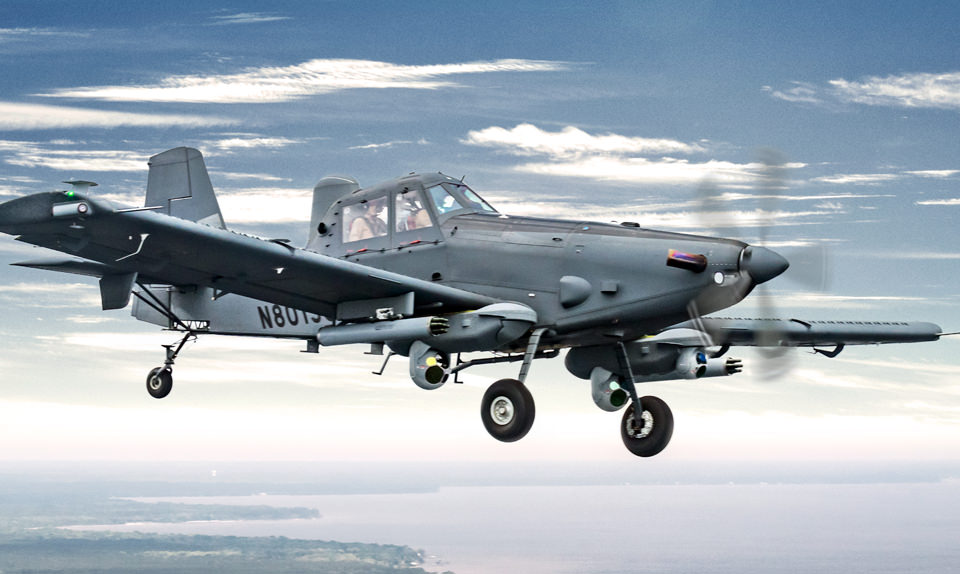
The OA-1K Skyraider II, known commercially as Sky Warden, is poised to give Air Force Special Operations Command a flexible new “hunter-killer” aircraft designed for the kinds of missions where high-end jets can’t easily go. Born out of lessons learned from the deadly 2017 Tongo Tongo ambush in Niger—when U.S. troops were left without timely air support—Sky Warden is meant to close critical surveillance and strike gaps in austere environments. Instead of relying on a costly stack of drones, ISR aircraft, and fighters, AFSOC is fielding a nimble, low-cost platform that can do the job for “pennies on the dollar.”
Based on the rugged Air Tractor AT-802U crop-duster, Sky Warden brings serious capability in a deceptively simple package: eight hardpoints for up to 6,000 lbs of weapons, twin EO/IR sensors, advanced comms and datalinks, and the ability to loiter more than eight hours. Its tailwheel design and chunky landing gear allow it to launch from improvised airstrips, aligning perfectly with the Air Force’s Agile Combat Employment strategy for rapid, small-footprint deployments. “We’re basically buying this complete production aircraft off the shelf,” said Maj. Alex Flori, who leads Armed Overwatch requirements for AFSOC.
The aircraft’s appeal isn’t just cost—it’s versatility. At a time when strategic focus is shifting toward China and Russia, Sky Warden frees up over-tasked assets like MQ-9 Reapers while providing persistent overwatch in regions where air threats remain low. Its two-sensor setup allows operators to track multiple targets simultaneously with near-instant reaction time, while onboard crews provide immediate decision-making advantages that remote operators can’t match. Retired Maj. Gen. Michael Kingsley called it “a tremendous amount of capability for a fraction of the price.”
Sky Warden’s success is also a story of execution. Unlike previous light attack programs that stalled, Armed Overwatch paired a clearly defined mission with rapid acquisition, strong leadership advocacy, and Congressional buy-in. With 75 aircraft planned by 2029, the platform is set to replace aging U-28A Draco ISR planes and augment Reaper fleets—while likely inspiring new tactics and mission sets as AFSOC aircrews get creative. As one test pilot put it, “It’s engineered to go well beyond the requirements. Once these crews get their hands on it, that’s when we’ll really see the value.”