

Skyraider II: Air Force special ops unveils name for new aircraft
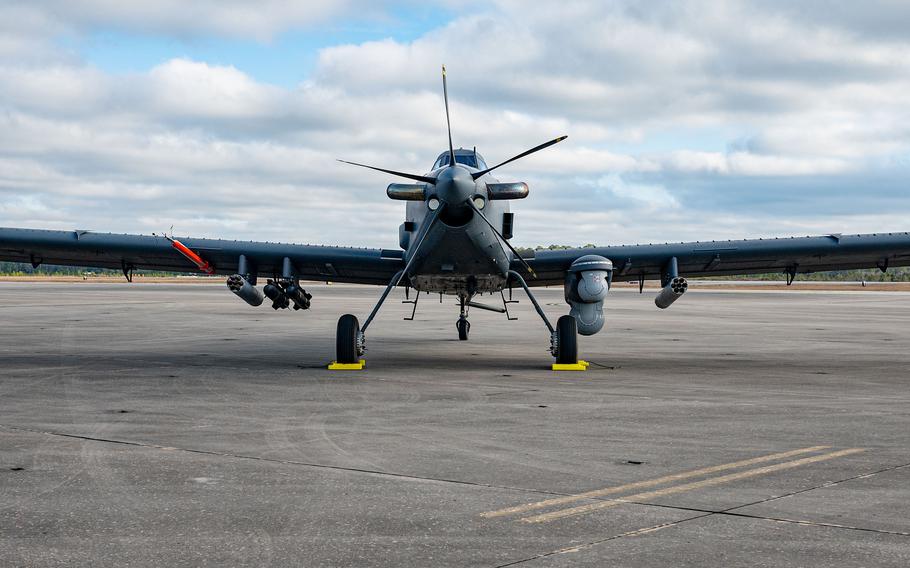
The U.S. Air Force’s newest aircraft, a modified crop-duster turned armed overwatch platform, now has an official name: the OA-1K Skyraider II. Announced at the Special Air Warfare Symposium in Fort Walton Beach, Florida, the name honors the legendary A-1 Skyraider, a close air support workhorse of the Korean and Vietnam wars. Lt. Gen. Michael Conley called the new aircraft “a capability that’s only ours,” adding that AFSOC will shape it into “something the rest of the nation might not even know they need right now.”
Developed by L3Harris and Air Tractor, the single-engine turboprop is based on the AT-802U Sky Warden. It can be outfitted for ISR operations and armed with 500–1,000 lb bombs, .50-caliber guns, and even 20mm cannons. With its short takeoff and landing performance and rugged airframe, the Skyraider II is tailored for operations from remote airstrips—making it ideal for supporting special operations forces in austere environments.
The program, initially set for 75 aircraft under a $3 billion contract, has been trimmed to 62 amid budget pressures and strategic reassessments. The Government Accountability Office has urged the Pentagon to revisit procurement plans as the U.S. military pivots toward high-end competition with near-peer adversaries like China and Russia. But AFSOC leaders remain firm, arguing that Skyraider II fills a critical niche: backing operators in regions like Africa, the Middle East, and even along the U.S. southwest border, where threats are ground-based and persistent air support is essential.
“While we don’t expect the Skyraider II to go mix it up with advanced fighters, it will provide value to our supported forces globally,” said Brig. Gen. Craig Prather. Expected to replace aging ISR aircraft like the U-28 Draco and MC-12, the Skyraider II represents a deliberate investment in adaptable, affordable airpower for missions that fall between counterterrorism and great power conflict.