

The OA-1K Skyraider II Has Something Very Strange on Its Nose
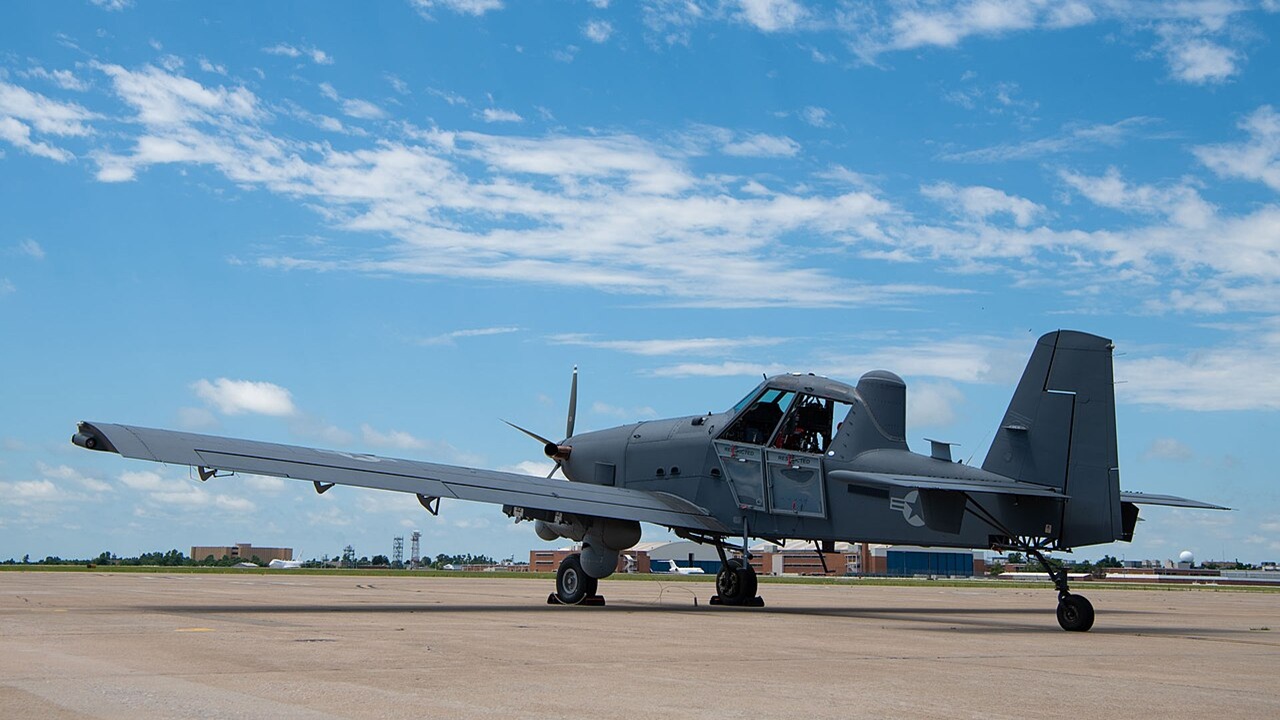
For the first time since Vietnam, the U.S. Air Force is fielding a propeller-driven attack aircraft—and it’s doing so by design. The OA-1K Skyraider II may look like an anachronism in a jet-dominated force, but it represents a deliberate shift toward affordability, persistence, and mission fit. Rather than chasing speed or stealth, the Skyraider II is built for the many real-world missions that don’t require billion-dollar aircraft or first-day-of-war capabilities.
The aircraft’s name nods to the Vietnam-era A-1 Skyraider, the Air Force’s last prop-driven attack platform, and its mission echoes that lineage. Born from the Armed Overwatch program, the OA-1K is designed for permissive and semi-permissive environments—counterterrorism, ISR, and close air support for special operations forces—where fast jets have been overused at high cost. It’s not a replacement for fighters or bombers, but a complementary tool built for endurance and flexibility.
The propeller is central to that strategy. Compared to jets, the turboprop design offers superior fuel efficiency, long loiter times, precise low-speed handling, and short-rough field performance. These traits allow the Skyraider II to operate closer to ground forces, positively identify targets, and maintain a persistent presence—while also reducing thermal and acoustic signatures at altitude. In short, it’s optimized for being there rather than getting there fast.
The OA-1K will never anchor the Air Force’s high-end fight, and it isn’t meant to survive against modern integrated air defenses. But its inclusion signals a broader acceptance of a low-high force mix—one that recognizes not every mission demands fifth-generation speed and stealth. By handling the slow wars efficiently, the Skyraider II frees up F-15s and F-35s for deterrence and peer conflict, proving that sometimes the smartest move forward is a carefully chosen step back.